
Introduction
Imagine this: You’ve spent thousands of dollars on premium stone, dedicated your entire weekend to manual labour, and finally unveiled a beautiful new outdoor retreat. It looks perfect for a month. But then, the first heavy rain hits. Suddenly, edges begin to sag, pavers start to wobble, and puddles form in the centre of your “level” oasis.
The heartbreak of a failing patio often comes down to one overlooked factor: using the wrong paver patio installation tools.
At Glscapes, we believe your backyard should be a sanctuary, not a source of stress. Achieving that professional, “magazine-ready” look isn’t just about the stones you choose; it’s about the specialized equipment used to set them. Let’s dive into the toolkit that separates a DIY headache from a lifelong investment.
The Invisible Foundation: Why Tools Dictate Longevity
Most homeowners focus on the colour and pattern of the pavers. However, the “life” of your patio happens underground. Without professional-grade paver patio installation tools, you are essentially building on quicksand.
A patio built without the proper gear often suffers from:
- The “Rollercoaster” Effect: Uneven surfaces that become tripping hazards.
- Drainage Nightmares: Water pooling against your home’s foundation.
Weed Invasion: Loose joints that invite unsightly growth.
The "Must-Have" Paver Patio Installation Tools for a Flawless Finish
To help you understand how Glscapes creates durable masterpieces, here is the breakdown of the essential paver patio installation tools every high-end project requires.
1. Precision Layout: Laser Levels and String Lines
Before a single shovelful of dirt is moved, the site must be mapped. While a standard tape measure works for size, professional paver patio installation tools like laser levels ensure the patio slopes away from your home at a perfect grade. This prevents basement flooding and standing water.
2. The Muscle: Commercial Plate Compactors
If you want to know the secret to a patio that never shifts, it’s compaction. A hand tamper simply isn’t enough. We utilize heavy-duty plate compactors to vibrate the soil and gravel base into a rock-solid foundation. This is one of the most critical paver patio installation tools because it eliminates the air pockets that cause pavers to sink over time.
3. The Art of the Cut: Industrial Masonry Saws
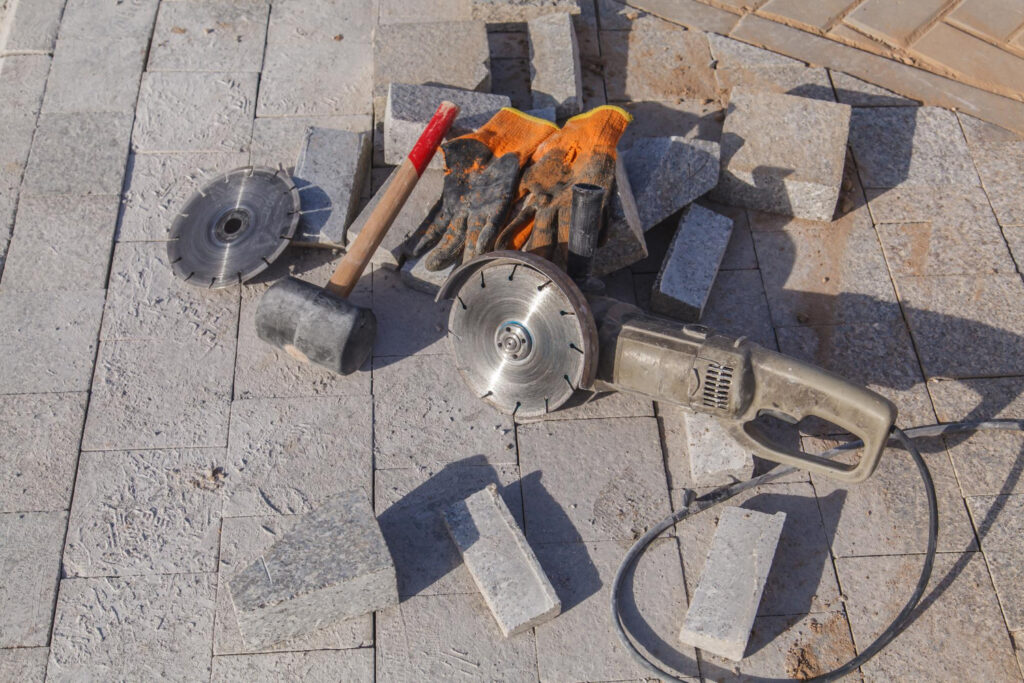
Ever seen a patio with jagged, uneven edges? That’s the result of poor cutting. To achieve those sleek curves and tight corners, we use wet masonry saws with diamond-tipped blades. These paver patio installation tools allow for surgical precision, ensuring every stone fits like a jigsaw puzzle.
4. The Levelling Secret: Screed Rails and Boards
To get a perfectly smooth bedding layer of sand, you can’t just “eye it.” Professionals use screed rails, long, straight pipes laid at a specific height, to pull a screed board across the sand. This specific set of paver patio installation tools creates a perfectly flat (but correctly sloped) surface for the pavers to rest on.
The Glscapes Difference: Beyond the Basic Toolkit
While many attempt a DIY approach, the cost of renting or buying professional paver patio installation tools can quickly rival the cost of hiring an expert. At Glscapes, we don’t just bring the tools; we bring the mastery of how to use them.
Our extended toolkit includes:
- Non-marking Rubber Mallets: To set stones without cracking or scuffing the surface.
- Geotextile Fabric: A heavy-duty barrier that prevents the base from mixing with the soil.
Polymeric Sand Brooms: Specialised tools to ensure the joint stabilizer is packed tightly to block weeds and ants.
Don't Let Your Investment Wash Away
Building a patio is a labour of love, but without the right paver patio installation tools, that love can quickly turn into a costly repair bill. Whether you are looking for a sleek modern lounge or a rustic cobblestone path, the equipment used during the first 48 hours of installation determines if the patio will last 2 years or 20.
Are you ready to transform your backyard without the stress of DIY?
Click here to schedule a free consultation and discover how Glscapes can help you build your dream patio today!
FAQs
Q1: Can I just use a hand tamper instead of a plate compactor?
Ans: We don’t recommend it. A hand tamper cannot provide the thousands of pounds of centrifugal force needed to prevent future settling. A plate compactor is a non-negotiable paver patio installation tool for quality work.
Q2: Why does the type of saw matter?
Ans: A standard circular saw isn’t designed for stone. An industrial masonry wet saw keeps the blade cool and prevents the pavers from chipping, resulting in a much cleaner aesthetic.
Q3: How much depth do I really need to dig?
Ans: Depending on your soil and intended use (walking vs. heavy furniture), you typically need to excavate 7 to 9 inches to account for the gravel base, sand bedding, and the paver itself.